Furnace repair or replacement: what to consider
Age is only one part of the decision. Here is how condition, repair history, comfort, and the house itself fit into a sensible choice.
By JBrown Mechanical
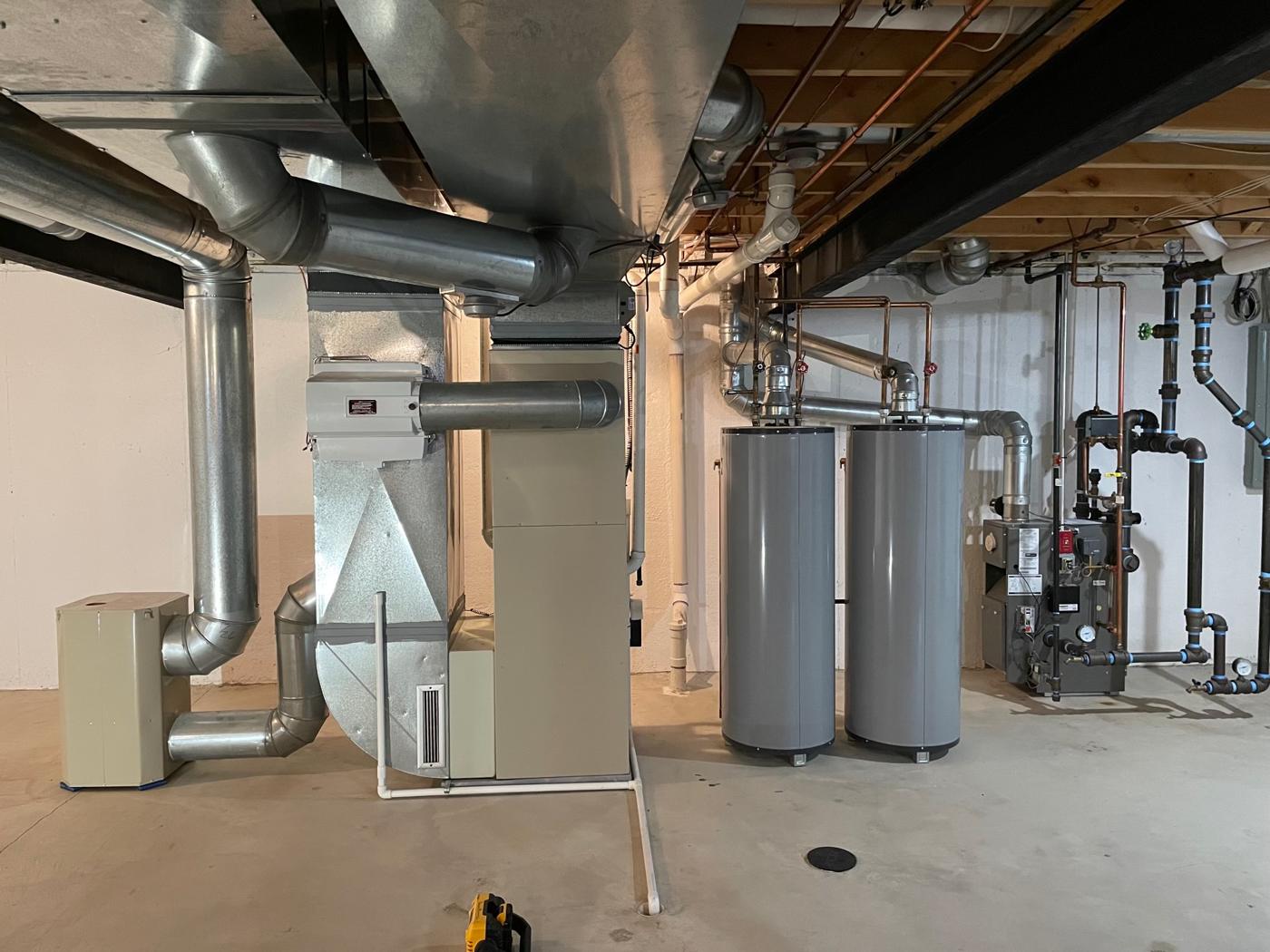
When a furnace breaks down in the middle of a cold week, the question usually arrives fast: is this worth fixing, or is it time for something new? It is a reasonable question, and there is rarely a one-line answer. The useful approach is to separate the decision into a few parts and look at each honestly.
Start with what actually happened
A furnace that stopped because of a single failed part is in a very different position from one that has needed attention every winter for several years. Before thinking about replacement, it helps to understand the specific problem: what failed, why it may have failed, and whether it points to wider wear in the system.
As a homeowner, you can contribute a lot here without touching the equipment. Notes like these are genuinely helpful to whoever assesses it:
- When the problem started and whether it came on suddenly or gradually
- Whether the furnace runs but blows cool air, or does not start at all
- Any new sounds, smells, or changes in how long it runs
- Rooms that have been uncomfortable for a while, not just since the breakdown
- Past repairs you remember, even roughly
Age matters, but it is not the verdict
People often hear that a furnace "should" be replaced after a certain number of years. Age is a fair consideration, because older equipment can be harder to find parts for and may be less efficient than newer designs. But two furnaces of the same age can be in very different shape depending on how they were installed, how hard they have worked, and how they have been maintained.
So age belongs on the list, next to condition, the nature and cost of the repair, and how often the system has needed help. None of those alone tells the whole story.
Comfort is part of the equation
Sometimes a breakdown is the moment a family realises the house has never felt quite right: one bedroom always cold, a basement that never warms up, temperatures that swing between too warm and too cool. If that sounds familiar, a straightforward repair may get heat back on without solving the comfort problem.
Comfort issues often have more to do with airflow and distribution than with the furnace itself. Ductwork that leaks, is undersized, or is poorly balanced can leave rooms short of air no matter what equipment is connected to it. That is worth knowing before spending money in either direction.
If replacement is on the table, size it to the house
A common assumption is that a new furnace should match the capacity of the old one. That may or may not be right. The heating a home needs depends on its size, insulation, windows, air leakage, and layout, and many homes have changed since the original equipment went in.
The U.S. Department of Energy's building science guidance explains that properly sizing heating and cooling equipment means calculating the home's actual load rather than relying on rules of thumb. Equipment that is too large tends to run in short bursts, which can mean uneven temperatures and extra wear; equipment that is too small may struggle on the coldest days. Installation quality, including duct condition and airflow, also affects how well any new system performs.
What you should not do yourself
It is fine to check the thermostat, replace thermostat batteries, make sure vents are not blocked, and look at whether the filter is visibly dirty. Beyond that, furnaces involve gas, electrical components, and combustion venting. Opening panels, bypassing switches, or trying to restart a system repeatedly is not a safe DIY project. If you ever smell gas, leave the house and follow your gas utility's emergency guidance.
When a professional assessment helps
An assessment is most valuable when it connects the immediate problem to the bigger picture: what failed, what condition the rest of the system is in, whether comfort complaints point to airflow, and what a replacement would need to account for. With that information, repair versus replacement becomes a decision you can make with confidence rather than under pressure.
The best decision is the one you understand, not the one made fastest.
If your furnace is giving you trouble, describe what you have noticed when you get in touch. You do not need to diagnose anything; the details you observed are the most useful place to start.